
Does Medicare Cover Dental Care?
The short answer is Original Medicare (Parts A and B) does not cover routine dental care. This gap has existed since Medicare was created in 1965, and it remains one of the most significant blind spots
READ MORE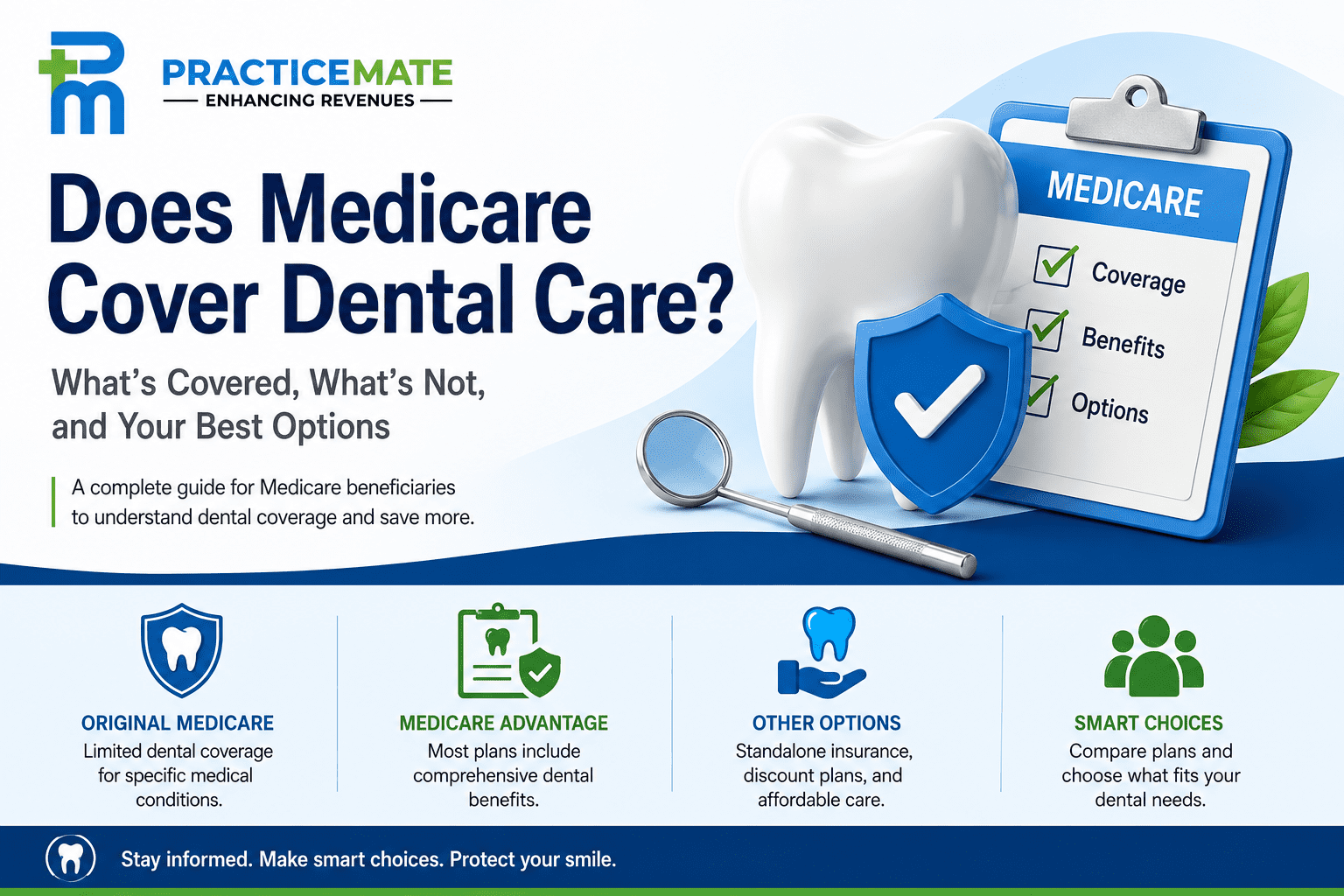
The short answer is Original Medicare (Parts A and B) does not cover routine dental care. This gap has existed since Medicare was created in 1965, and it remains one of the most significant blind spots
READ MORE
If you run a clinic, manage billing, or code for a practice, HCPCS codes touch almost every claim you file. They describe the supplies, devices, drugs, and non-physician services that CPT codes don’t cover. Get HCPCS
READ MORE
Imagine a world where medical bills were always paid in full. Sounds nice, right? Unfortunately, that’s not how healthcare payments work. Contractual adjustments are a reality that every provider must face. Contractual adjustments can be thought
READ MORE
Neurology is a complex field, and so is its billing. From EEGs to Botox injections for migraines, every procedure has its own CPT code, documentation rules, and payer guidelines. If you don’t bill it right, it
READ MORE
Health insurance payers are the lifeblood of the American healthcare system. For healthcare providers, navigating the payer landscape is not just about claims and reimbursements — it’s about building long-term relationships, staying compliant, and ensuring financial
READ MORE
If you’re in the healthcare industry—whether you’re a provider focused on patient care, an administrator managing workflows, or a medical coder ensuring claims are processed accurately—understanding the nuances of medical coding isn’t just helpful. It’s essential.
READ MORE
Reading a health insurance card is crucial for healthcare providers, administrative staff, and patients. Understanding each section ensures accurate billing, seamless claims processing, and proper coordination of benefits, especially when multiple payers are involved. This guide
READ MORE
Brief Resolved Unexplained Event (BRUE) is a term used in pediatrics to describe sudden, short-lived infant episodes involving changes in breathing, skin color, or muscle tone. Accurate documentation and coding using the ICD-10 system are essential
READ MORE
ICD-10 D72.829 is the medical code used to classify and document cases of leukocytosis, a condition where the white blood cell (WBC) count in the blood is abnormally high. White blood cells play a crucial role
READ MORE
Dealing with prior authorizations (PAs) for medication can frustrate healthcare providers and patients. For patients, it often delays in receiving the treatment they need. For healthcare providers, it can add unnecessary steps and administrative work. These
READ MORE